• 3 min read

The holidays aren’t always happy

  • Resources

We’ve all heard the saying, “it’s not Christmas until somebody cries.” For many people, the holidays can be challenging. They may not feel peaceful, joyful or happy.

The holiday season often brings mixed emotions. Stress, loneliness and feeling overwhelmed are common. It’s also normal to feel more than one of these at the same time.

“This time of year can be tough due to expectations we place on ourselves and demands that are placed upon us. We feel pressure when our plans don’t turn out the way we want,” says Véronique Dufresne, a Mental Health Consultant on the Extended Health Team at Calgary Foothills Primary Care Network. “It’s normal to experience stress during the holidays. They can be trying, both emotionally and mentally. That includes spending time with family members and relatives you have not seen in a long time.”

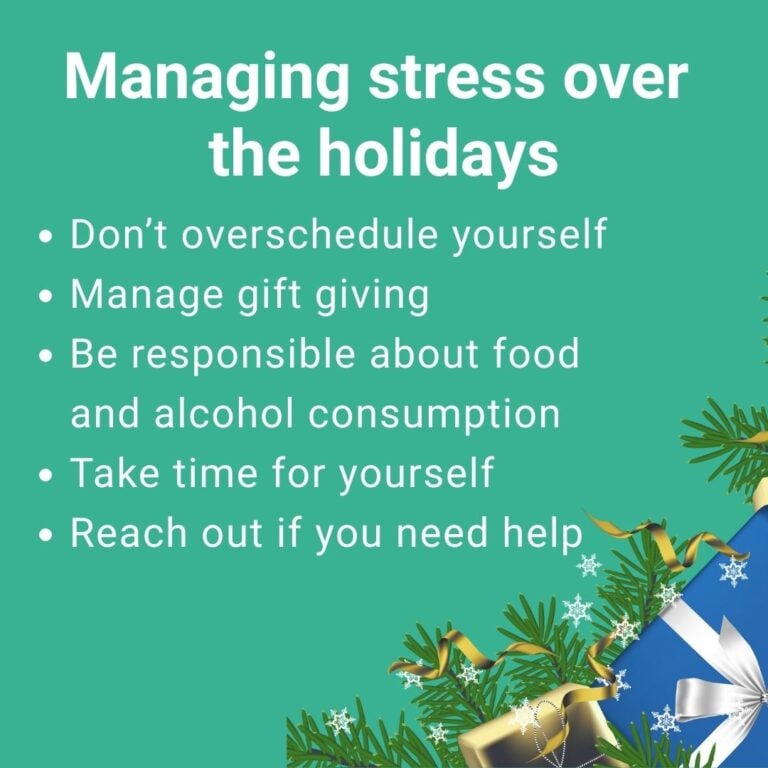
Tips to manage stress over the holidays: 1) Don’t overschedule yourself 2) Manage gift giving 3) Be responsible about food and alcohol consumption 4) Take time for yourself 5) Reach out if you need help
Image content sourced from: health.ucdavis.edu

Science supports your feelings

Nearly half of Canadians say that December is the most stressful month. Women are 40% more likely than men to experience stress during the holidays, according to the 2024 TELUS Mental Health Index.

“We need to make sure we take time to take care of ourselves and prepare for stressful visits. Do something simple like breathing deeply or going for a walk before dinner. Take a bath or do something you enjoy to help you relax,” says Dufresne.

Seasonal Affective Disorder

The holidays arrive just as winter begins. The days are shorter, sunlight fades and the long stretch of cold months can weigh heavily on people.

If you experience sadness that impacts your daily life, you may want to talk to your doctor or other health-care provider about Seasonal Affective Disorder, or SAD for short.
The Centre for Addiction and Mental Health – Canada’s largest mental health hospital – defines SAD as:

“… a type of depression that occurs during the same season each year. It usually happens in the fall or winter, but some people may experience season-linked symptoms in the summer.”

Common symptoms include a sad, low and despairing mood that:

  • is present most days and lasts most of the day
  • lasts for more than two weeks
  • impairs your performance at work, at school or in social relationships

“For some people, it’s normal to experience a low mood at this time of year,” says Dufresne. “Days are shorter, there’s less sunlight and the coming winter is discouraging. However, if you feel like you’re unable to cope, I’d encourage you to speak with your doctor. There are ways to address SAD that are easy to access and provide relief.”

Treating SAD

Light therapy can provide help for those experiencing SAD.

Spending more time outdoors and increasing exercise can also bring you relief.

There are other treatments and therapies that may provide relief from SAD.

How the PCN can help

Connect with a Mental Health Consultant at Calgary Foothills Primary Care Network. Our One-Step-at-a-Time Counselling program offers single-session support for adults, couples and families who are facing a challenge and need someone to talk to.

Consider taking one of our workshops:

  • Anxiety 101
  • Anxiety to Calm
  • Pathways to Happiness

If you are experiencing a crisis, struggling with sadness, feeling anxious or having suicidal thoughts, please call the Distress Centre’s 24-hour helpline at 403-266-4357 or call 211.

Your family doctor or nurse practitioner can also help.

Don’t have a health-care provider? Visit Alberta Find a Doctor and find a family doctor or nurse practitioner in your area who is accepting new patients.